
Walk-in Shower Conversions in Minnesota
We cover 105 Minnesota towns. Prices here run about 4% above the US average.
What Minnesota homeowners pay
Acrylic base + walls
Tub out, low-threshold shower pan, acrylic or solid-surface walls, new valve trim, curtain or basic door.
Tiled walk-in shower
Tub out, mortar or foam pan, full waterproofing, tile walls and floor, niche, glass door.
Curbless / barrier-free
Floor recessed for zero entry, linear drain, bench or fold-down seat, grab bars, frameless glass.
Hiring a contractor in Minnesota
Residential remodelers must be licensed by the Minnesota Department of Labor and Industry.
- Verify the license or registration on the state lookup and match the name on the estimate.
- Ask for a certificate of general liability insurance and workers' comp, sent directly from the insurer.
- Get a written, line-item estimate: demo, plumbing, waterproofing, tile, fixtures, permit.
- Ask who pulls the permit. It should be the contractor, in their name.
Minnesota cities we cover
The first 96 have the most installers available.
Other bathroom services in Minnesota
Free walk-in shower quote in Minnesota
A licensed installer near you measures and prices the job at no cost.
FAQ
How much does a tub-to-shower conversion cost in Minnesota?
Across Minnesota, a tiled walk-in shower typically costs $8,900 – $16,700, and simpler jobs start near $4,700. Statewide, prices run about 4% above the US average; big metro areas are higher than small towns.
Do Minnesota bathroom contractors need a license?
Residential remodelers must be licensed by the Minnesota Department of Labor and Industry.
How long does it take?
An acrylic conversion is usually 1 to 3 days. A tiled shower takes 1 to 2 weeks with cure times for the pan, waterproofing and grout.
Does removing the tub hurt resale value?
Not if there is another tub in the house. If this is the only one, some buyers with young children will mind. In 55+ communities a walk-in shower is usually a selling point.
Is a walk-in shower or a walk-in tub better for seniors?
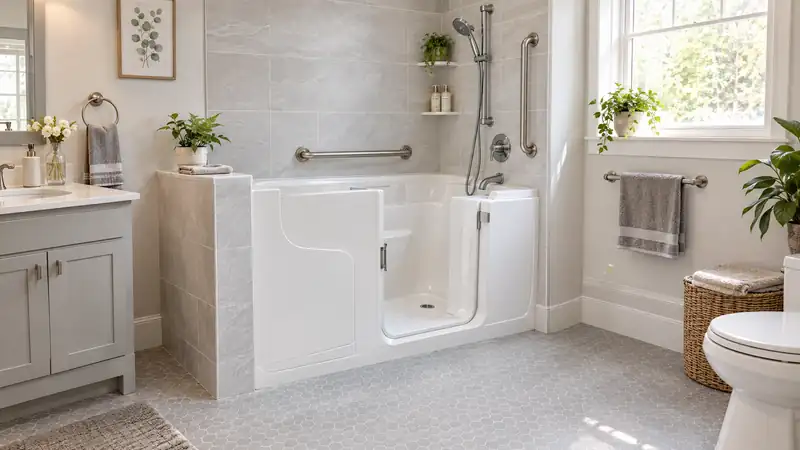
If the person can stand for a few minutes or is happy on a shower seat, a low or zero-step shower is cheaper, faster to use and easier to clean. A walk-in tub makes sense for people who want to soak or cannot stand at all.